Sensor Applications in Plastic and Metal Forming Equipment
Sensors play a critical role in plastic and metal forming equipment, helping manufacturers improve forming precision, quality control, process stability, and overall production efficiency. Accurate real-time measurement enables better control of critical manufacturing parameters and supports consistent product quality.
Key Characteristics of Plastic and Metal Forming Equipment
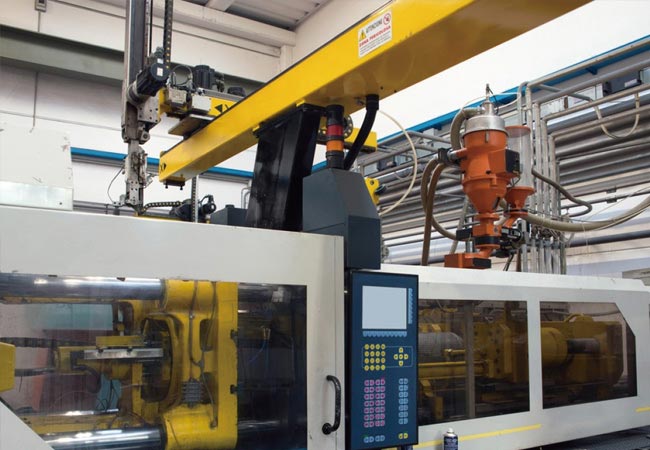
Plastic and metal forming equipment includes a wide range of machinery designed to shape and process materials with high precision and efficiency. In plastic processing, equipment such as injection molding machines requires precise monitoring and control of mold temperature, injection pressure, and material flow to produce consistent, high-quality plastic components.
In metal forming, equipment such as die casting machines and metal stamping presses requires accurate control and monitoring of parameters including clamping force, cavity pressure, forming force, and material thickness. Reliable industrial sensors provide real-time measurement data to help manufacturers optimize these critical processes.
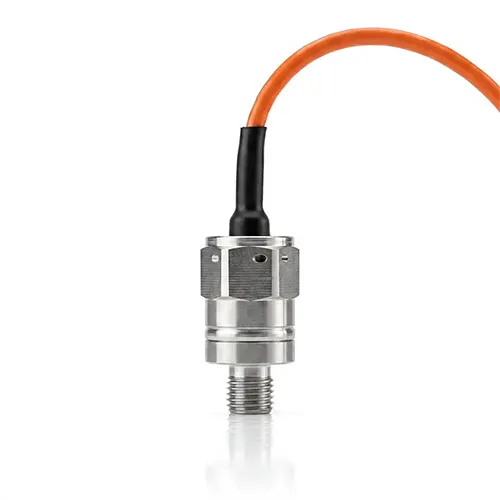
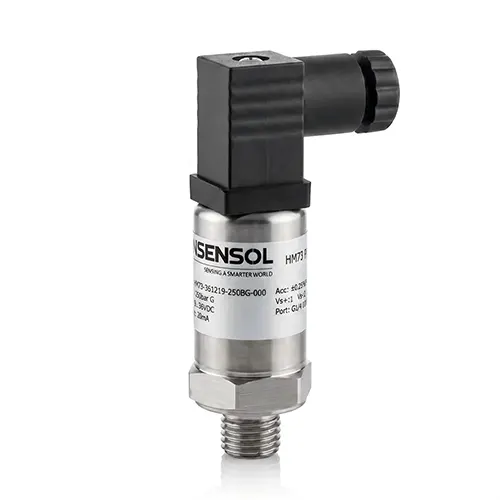
Pressure sensors, force sensors, temperature sensors, and displacement sensors can be integrated into plastic and metal forming equipment to monitor key operating conditions, improve process control, and support quality assurance. Accurate sensor feedback helps identify process deviations, reduce production defects, and improve equipment performance.
Plastic and metal forming machines are widely used across industries including automotive, aerospace, electronics, consumer products, and general manufacturing. Their ability to process different materials, complex geometries, and high-volume production makes them essential to modern manufacturing.
As industrial automation, smart sensors, and connected manufacturing technologies continue to advance, sensor-based monitoring and control are becoming increasingly important. Reliable sensor solutions for plastic and metal forming equipment help manufacturers achieve greater precision, productivity, consistency, and long-term production efficiency.
Key Applications of Sensors in Plastic and Metal Forming Equipment
Sensors play a critical role in plastic injection molding and metal forming equipment by enabling precise process monitoring, improving production efficiency, and maintaining consistent product quality. From temperature and pressure monitoring to injection control, mold cooling, ejection force measurement, and defect detection, industrial sensors help manufacturers achieve greater accuracy, reliability, and automation throughout the forming process.
1. Temperature Control in Plastic and Metal Forming
Temperature sensors are essential for precise temperature control in plastic injection molding and metal forming equipment. Commonly used devices include thermocouples and infrared temperature sensors, which monitor mold temperatures, molten material temperatures, and other critical process conditions.
Accurate temperature data helps maintain optimal processing conditions, ensuring consistent product quality and dimensional stability. Proper temperature control can also reduce common molding defects, such as warping, uneven cooling, and material deformation. By maintaining stable thermal conditions, temperature sensors help improve production efficiency and the overall quality of molded components.
2. Pressure Monitoring During the Forming Process
Industrial pressure sensors play a vital role in monitoring and controlling the pressure applied during plastic injection molding and metal forming operations. They help ensure that the forming process operates within the required pressure range to produce parts with the desired shape, dimensions, and surface quality.
Real-time pressure measurements allow operators and automated control systems to adjust process parameters as needed, improving molding accuracy, repeatability, and process stability. In plastic injection molding, pressure monitoring can help reduce defects such as flash, incomplete mold filling, and inconsistent material flow.
Reliable pressure sensors and pressure transmitters are therefore important components of modern forming equipment, supporting better process control and more consistent manufacturing results.
3. Injection Speed and Flow Control
In plastic injection molding, sensors help monitor and control the speed and movement of molten material as it enters the mold. Flow sensors and position or displacement sensors can provide useful data about material flow, injection mechanisms, and the movement of machine components.
Accurate monitoring helps maintain consistent filling conditions and promotes uniform material distribution throughout the mold. This can reduce defects such as voids, short shots, and uneven filling.
By integrating suitable sensors into injection molding equipment, manufacturers can improve process repeatability, optimize cycle performance, and maintain more consistent production quality.
4. Mold Cooling System Optimization
Temperature sensors help monitor and optimize mold cooling systems in plastic injection molding equipment. By measuring temperatures at key points in the mold and cooling circuit, these sensors provide data that supports more precise cooling control.
Maintaining appropriate cooling conditions helps plastic materials solidify consistently and reach the required dimensions before ejection. Effective cooling control can shorten molding cycle times, improve energy efficiency, and reduce defects associated with uneven cooling or residual thermal stress.
Temperature monitoring is particularly valuable in automated production environments where stable cycle times and repeatable product quality are essential.
5. Ejection Force Monitoring
During demolding, sensors can be used to monitor the force required to eject a molded part from the mold. Force sensors and load cells can measure ejection forces or detect abnormal increases in resistance, depending on the equipment design and sensor configuration.
This information helps identify potential issues, such as parts sticking to the mold, excessive ejection resistance, or abnormal mechanical loads. Monitoring ejection force can help prevent damage to molds and molded components while keeping the ejection process within an appropriate operating range.
By detecting unusual force variations early, manufacturers can improve mold reliability, reduce wear, and extend the service life of forming equipment over repeated production cycles.
6. Quality Inspection and Defect Detection
Vision sensors and automated inspection systems are widely used for quality control in plastic and metal forming applications. These systems capture images of finished components and analyze them for defects such as surface irregularities, cracks, dimensional deviations, and other visible imperfections.
Real-time inspection allows manufacturers to identify nonconforming parts earlier in the production process, reducing the risk of defective products reaching downstream operations. When integrated with automated production lines, inspection systems can support part sorting, process feedback, and more consistent quality assurance.
Combining sensor-based monitoring with automated inspection helps manufacturers improve product reliability, reduce scrap, and maintain consistent manufacturing standards.
Sensors are essential to modern plastic injection molding and metal forming equipment. Their applications include temperature control, pressure monitoring, injection speed and flow control, mold cooling optimization, ejection force measurement, and automated quality inspection.
By integrating appropriate industrial sensors into forming equipment, manufacturers can improve process precision, production efficiency, product consistency, and equipment reliability. Pressure sensors, temperature sensors, force sensors, and displacement sensors can all contribute to better process visibility and more effective automation when selected to meet the specific requirements of the application.
As manufacturing continues to move toward smarter and more automated production, reliable sensor technology remains an important foundation for improving the quality and efficiency of plastic and metal forming processes.