Sensor Applications in the Metal Processing Industry
Industrial sensors play a critical role in modern metal processing and metalworking operations. By continuously monitoring key parameters such as temperature, pressure, vibration, and displacement, sensors help manufacturers maintain stable processes, improve production efficiency, and achieve consistent product quality.
Key Characteristics of the Metal Processing Industry
Metal processing involves demanding manufacturing processes that require high levels of precision, reliability, and process control. Metalworking sensors enable real-time monitoring of critical equipment and production parameters, helping manufacturers maintain accurate process conditions and improve machining accuracy.
High-precision temperature sensors, pressure sensors, and displacement sensors can support precise control of metal processing equipment, helping improve dimensional accuracy, product consistency, and overall manufacturing quality. Sensors can also detect abnormal operating conditions and potential equipment failures at an early stage, helping prevent unexpected downtime, reduce maintenance costs, and improve workplace safety.
With the development of Industrial IoT (IIoT), automation, and data analytics, sensor applications in metal processing are becoming increasingly intelligent. Real-time sensor data can be used for remote equipment monitoring, performance analysis, condition monitoring, and predictive maintenance, allowing manufacturers to improve equipment utilization and production efficiency.
As a key component of modern manufacturing, reliable industrial sensor solutions help metal processing companies achieve greater precision, efficiency, safety, and long-term production reliability.
Main Applications of Sensors in the Metalworking Industry
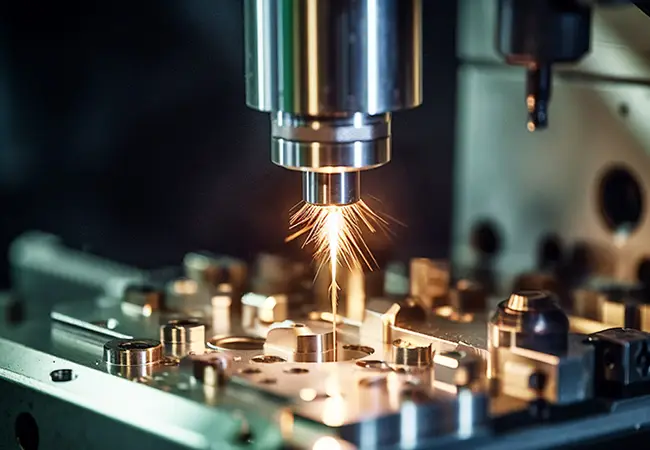
Industrial sensors play a critical role in metalworking and metal manufacturing by improving machining accuracy, equipment safety, process control, and production efficiency. From CNC machining and metal forming to stamping, rolling, and automated material handling, industrial sensors for metalworking help manufacturers monitor operating conditions, detect faults, and maintain consistent production quality.
1. Workpiece Detection and Positioning
Proximity sensors, photoelectric sensors, and laser sensors detect workpieces and verify their positions during machining and material handling. They support part presence detection, alignment, orientation identification, and fixture positioning, helping ensure accurate loading and unloading while reducing machining errors and wasted production cycles.
2. Machine Tool Position and Travel Limit Control
Position sensors, travel limit sensors, and proximity switches help control the movement of machine tools, stamping equipment, and industrial robots. They support homing, travel limit detection, collision prevention, and station switching, helping protect machines, tools, and dies from damage caused by excessive travel or incorrect positioning.
3. Tool Condition Monitoring
Vibration, temperature, and displacement sensors help monitor tool conditions and detect signs of wear, chipping, or breakage. By identifying abnormal machining conditions early, these sensors can trigger alarms or support automatic machine shutdowns, reducing scrap, protecting workpieces and tooling, and improving machining reliability.
4. Pressure and Hydraulic-Pneumatic Control
Industrial pressure sensors and pressure transmitters monitor hydraulic systems, pneumatic clamping devices, stamping and forging operations, and lubrication systems. They help maintain stable pressure, support overload protection, and enable closed-loop clamping force control, improving process stability and product consistency in metalworking applications.
5. Temperature Monitoring and Thermal Management
Industrial temperature sensors monitor spindle bearings, motors, cutting fluids, dies, molds, and furnaces. Temperature data helps identify overheating, trigger alarms, and control cooling systems when required. Effective temperature monitoring helps prevent premature equipment wear, thermal deformation of workpieces, and machining accuracy issues.
6. Speed and Rotational Speed Monitoring
Hall effect sensors, rotary encoders, and speed sensors monitor spindle speed, conveyor speed, and roller line speed. They support speed synchronization, constant-speed control, and the detection of slippage or abnormal operating conditions. These sensors are widely used in metal rolling, material handling, and precision machining processes.
7. Safety Monitoring and Interlocking
Safety light curtains and safety sensors help detect personnel entering hazardous areas around machine tools, stamping presses, and industrial robots. When integrated into a properly designed safety control system, they can trigger protective stops or safety interlocks to reduce the risk of mechanical injuries and support workplace safety requirements.
8. Level and Fluid Monitoring
Level sensors monitor cutting fluids, lubricating oil, coolant tanks, and hydraulic oil reservoirs. They help detect low or high fluid levels and can trigger alarms or automatic replenishment when supported by the control system. Reliable fluid monitoring helps maintain proper lubrication and cooling while reducing equipment faults and unplanned downtime.
9. Vibration Monitoring and Predictive Maintenance
Vibration sensors for industrial equipment collect vibration data from machine tools, motors, gearboxes, and other rotating machinery. Monitoring changes in vibration patterns can help identify developing mechanical faults, wear, or imbalance. This supports condition-based maintenance, reduces unexpected downtime, and improves equipment availability and production line efficiency.
Sensors are essential to modern metalworking operations, supporting workpiece positioning, machine travel control, tool condition monitoring, hydraulic pressure control, temperature monitoring, speed measurement, safety interlocking, fluid level monitoring, and predictive maintenance. By providing reliable real-time data, industrial sensors for metalworking and metal manufacturing help improve machining accuracy, equipment reliability, workplace safety, and overall production efficiency.